Co-sleeping crib for hospitals
The Design Challenge
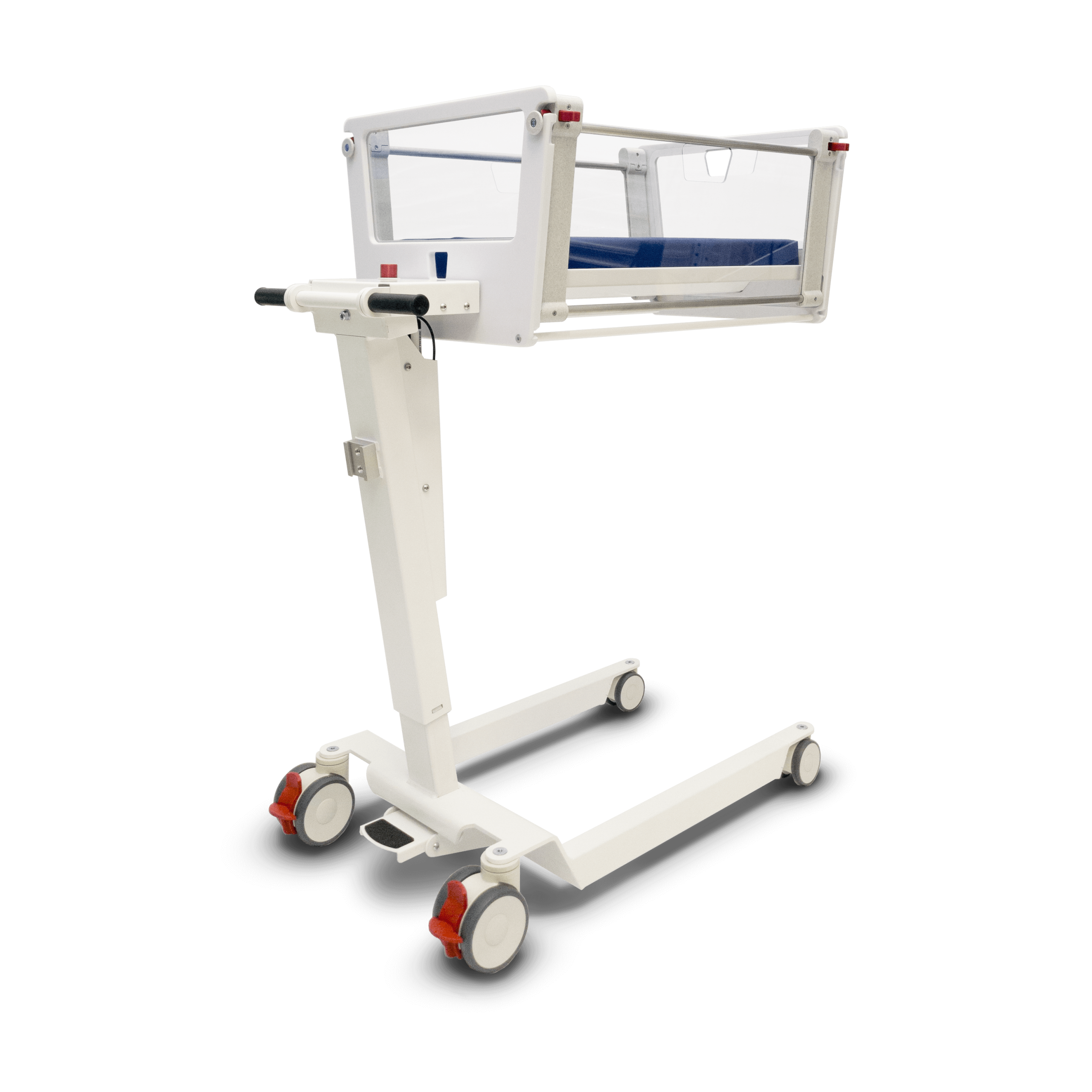
The existing prototype of the Mobycrib Joy baby crib by VAB did not yet meet all the requirements for hospital use. Its functionality, safety, and appearance were insufficiently aligned with medical standards and the existing Mobycrib product line. The challenge was to optimize the design into a fully-fledged product prototype, suitable for pilot placements in hospitals.
The Solution
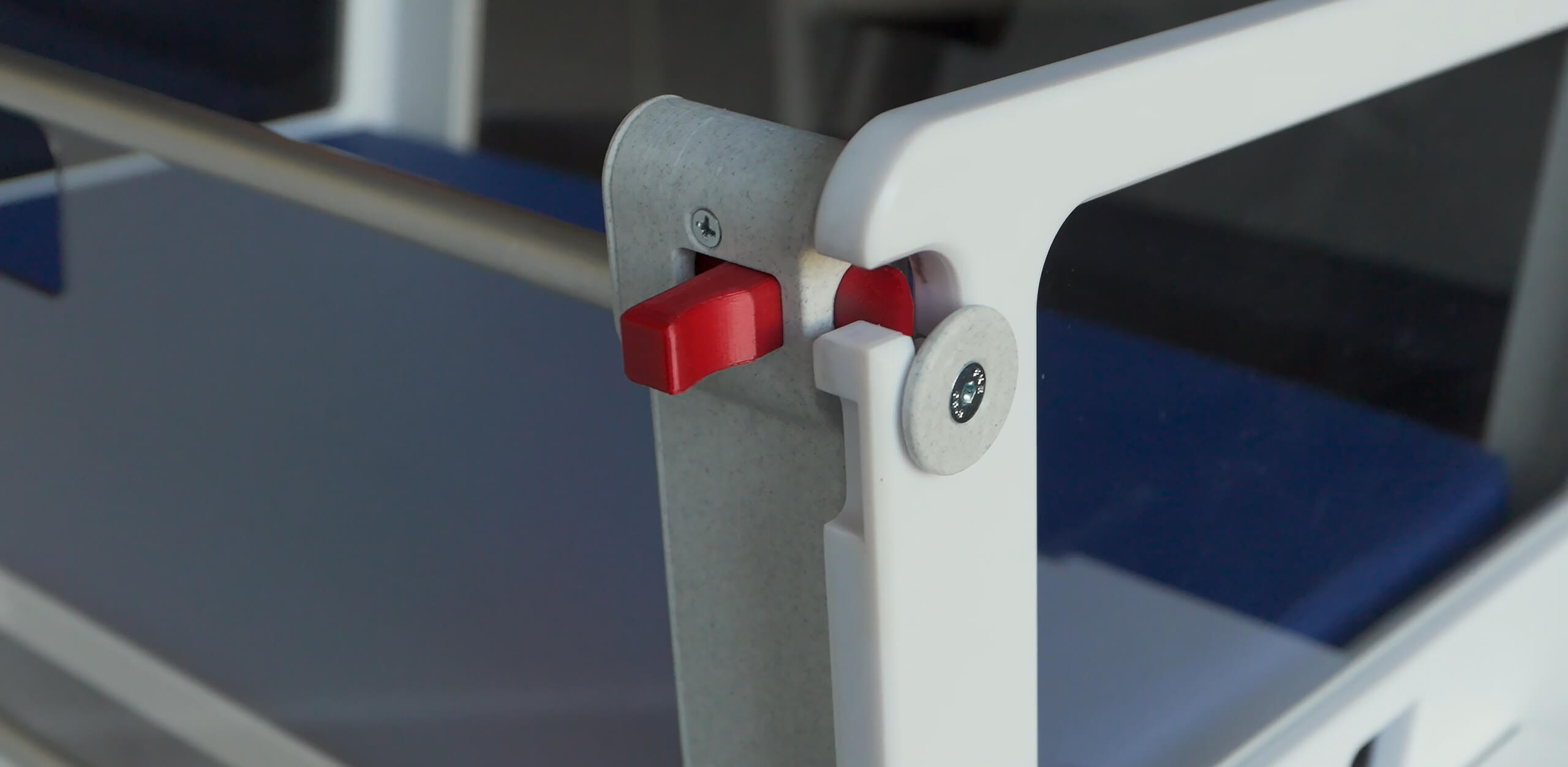
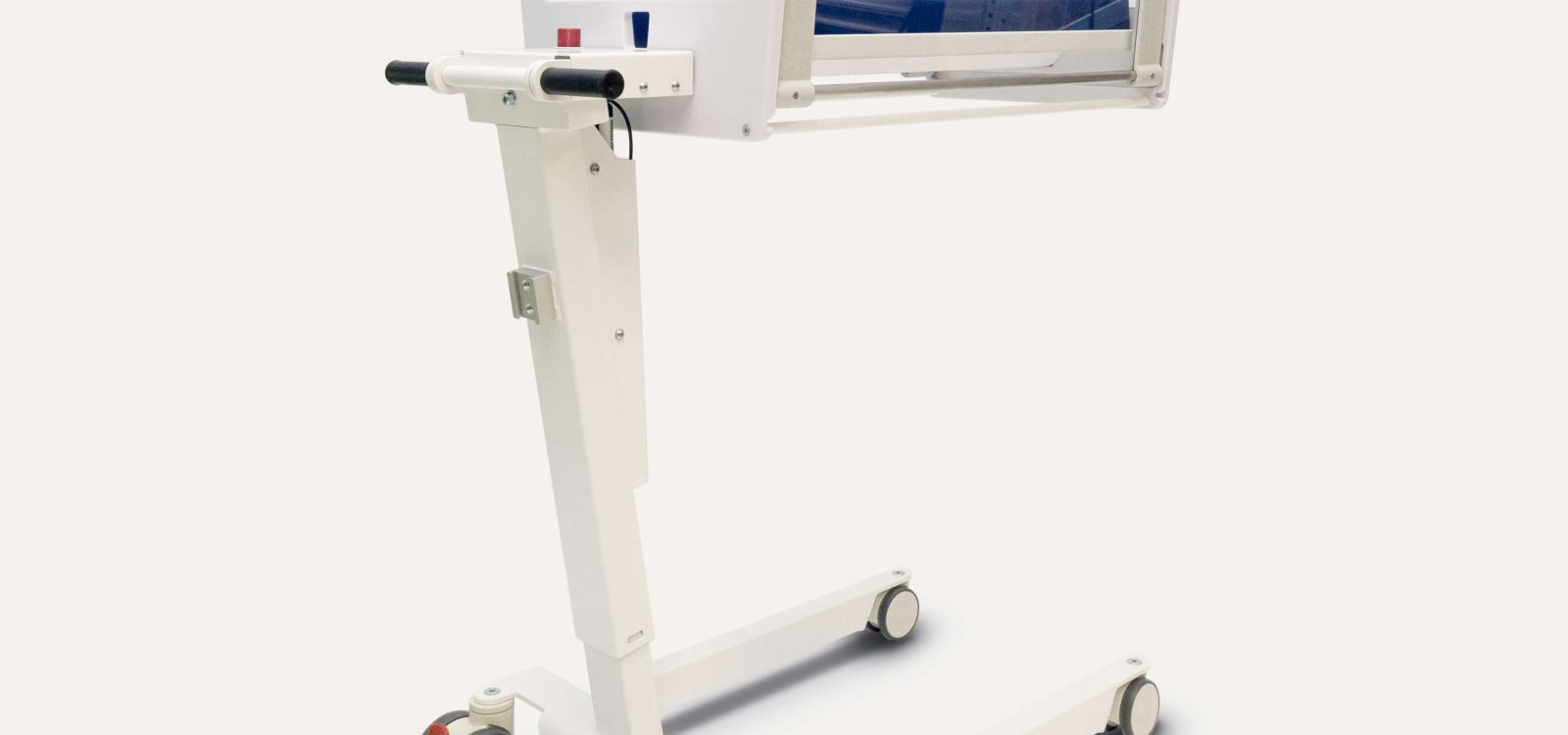
We further developed the Mobycrib Joy into a safe, ergonomic, and medical Class I product in which functionality, hygiene, and ease of use come together. The prototype was technically and aesthetically refined with an improved tilting mechanism, intuitive operation, and integrated locking systems—ready for use in clinical practice.

Co-sleeping in hospitals
Het doel van de Mobycrib Joy is het mogelijk maken van veilige co-sleeping binnen een klinische omgeving. Het bedje kan parallel naast het ziekenhuisbed worden geplaatst of gedeeltelijk over het bed heen schuiven, waardoor directe nabijheid ontstaat zonder in te leveren op stabiliteit. Deze positioneringsvrijheid vroeg om een uitgebalanceerde constructie die veiligheid, wendbaarheid en toegankelijkheid in één systeem verenigt.
Accessibility and visibility
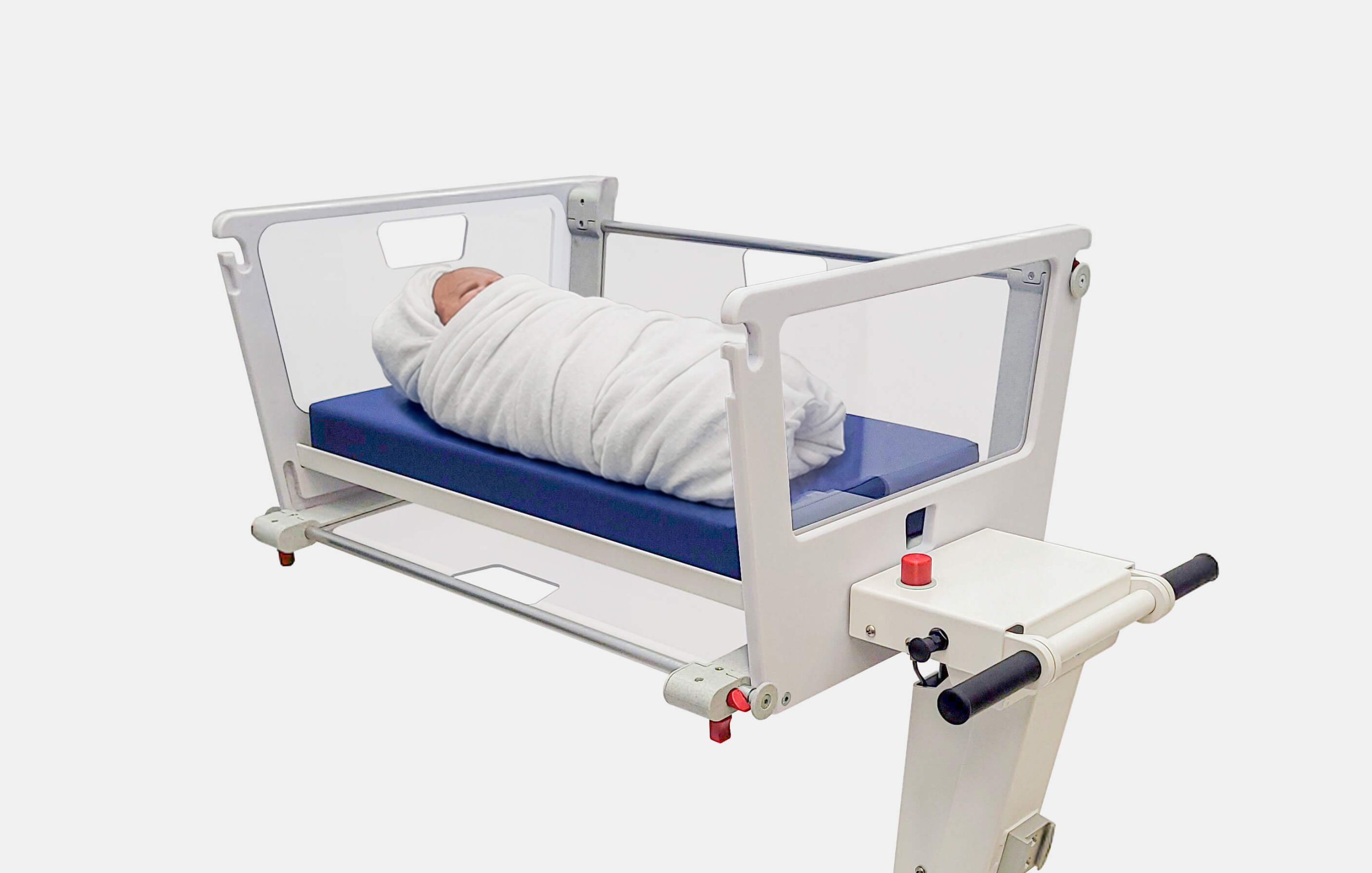
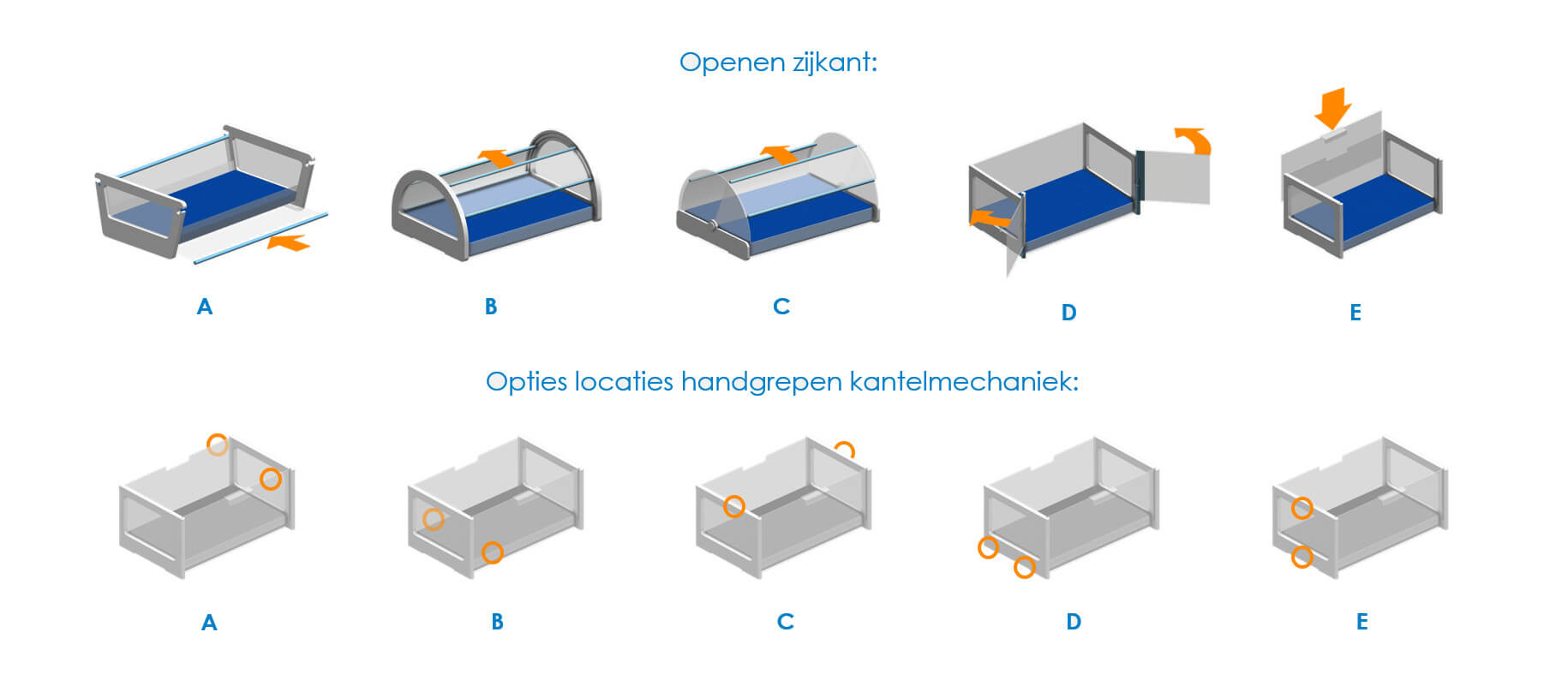
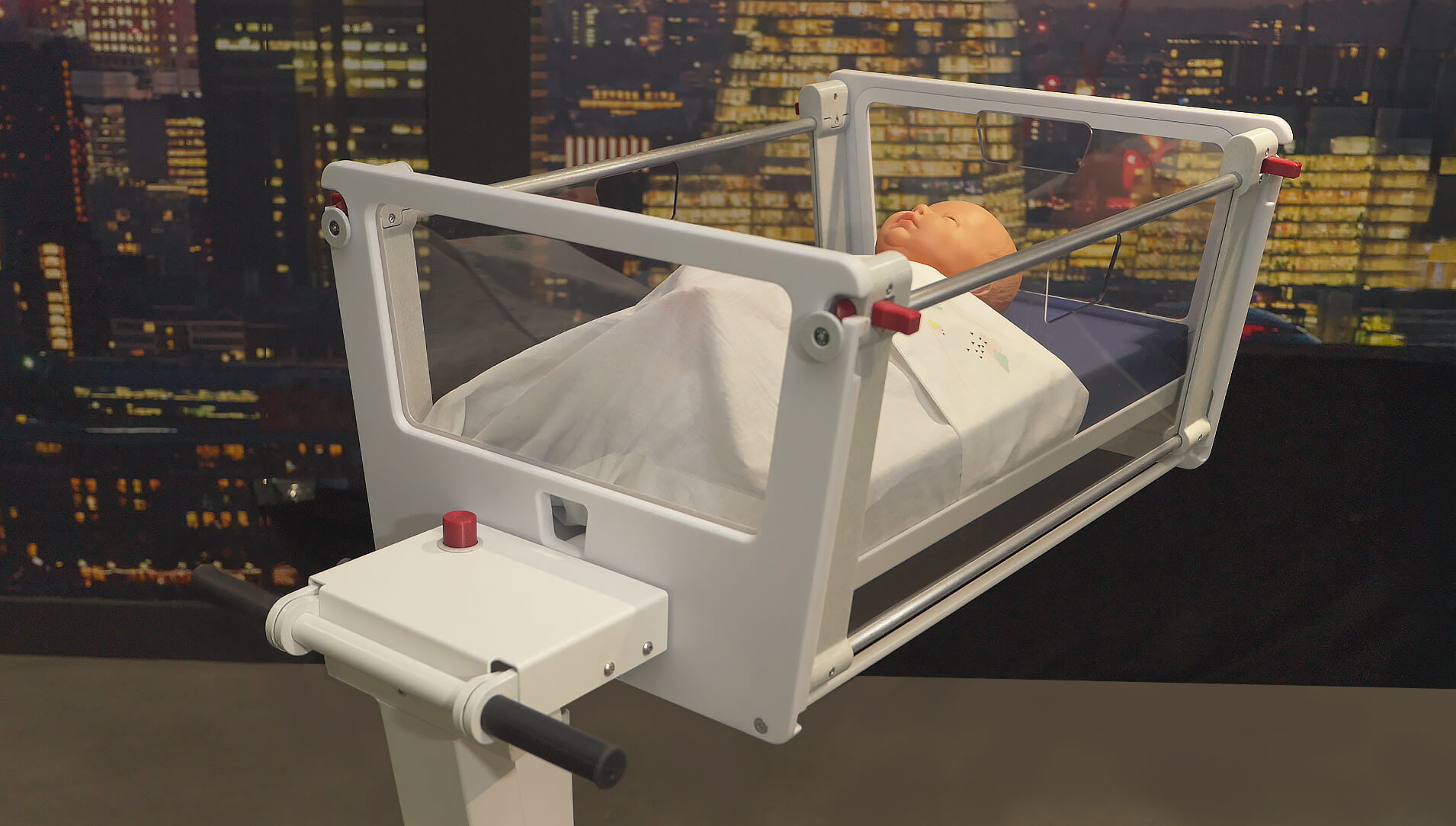
One of the greatest strengths of the Mobycrib Joy is optimal access to the baby. Thanks to the double-sided opening side panels and the option to position the crib close to or partially over the hospital bed, direct access for care and contact is created. Healthcare professionals can work safely and ergonomically, while parents can easily touch, lift, or comfort their child.
Functional development
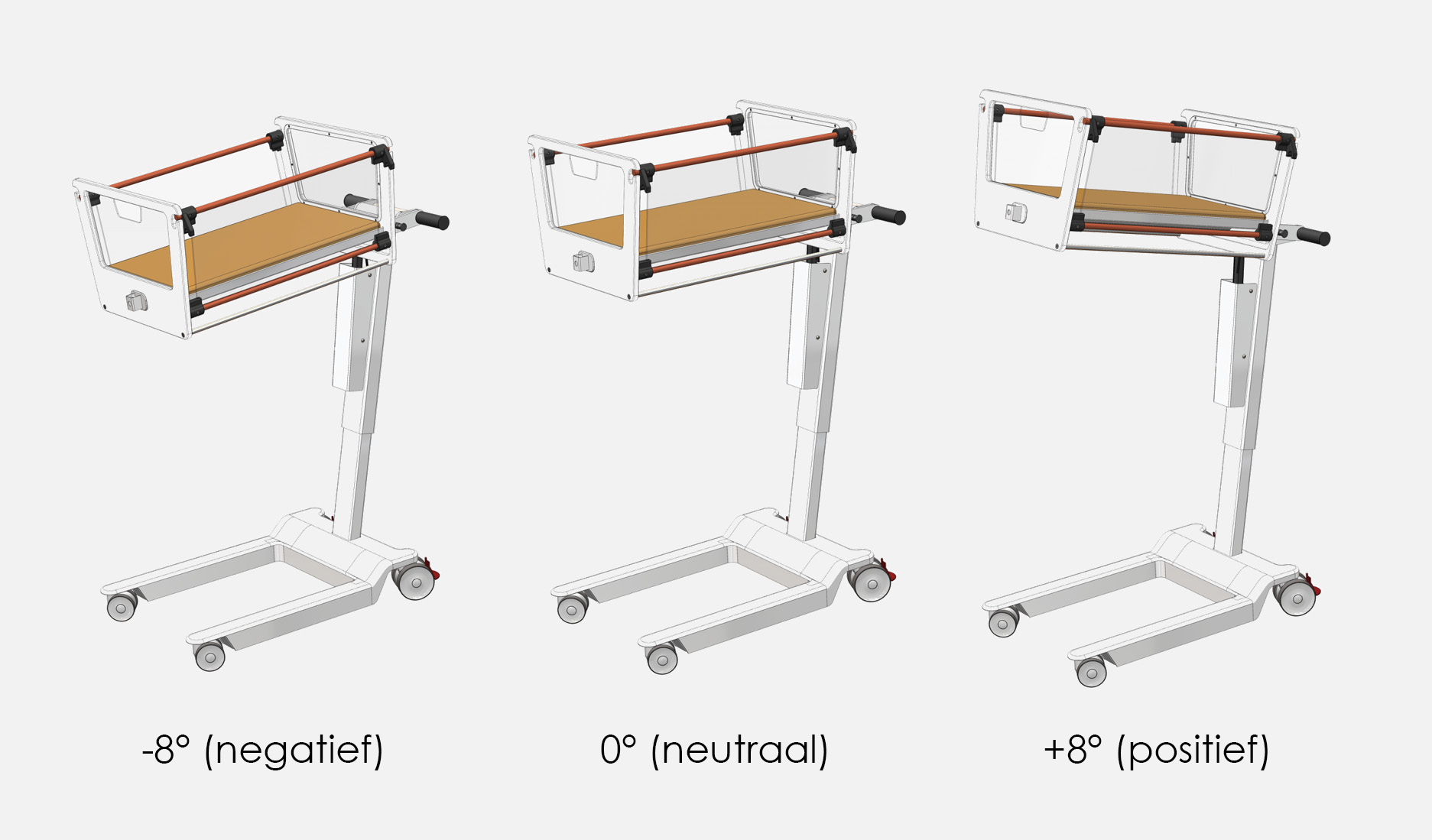
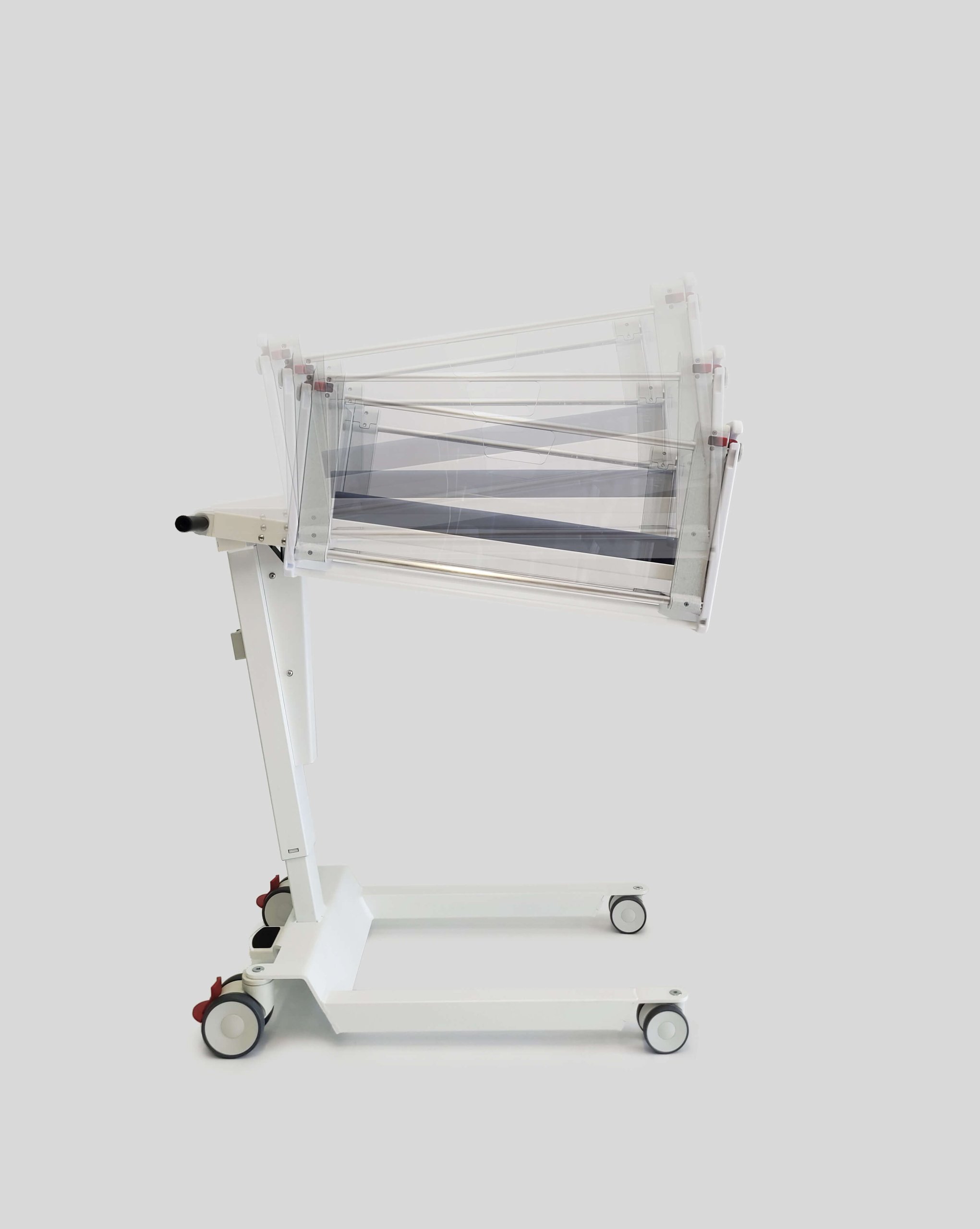
A major part of the redesign focused on adding and improving functionality. The crib can now be opened on both sides down to just below the mattress, without allowing both sides to be opened simultaneously. In addition, the tilting mechanism was completely redesigned, enabling effortless operation of Trendelenburg positions, as shown on the right.
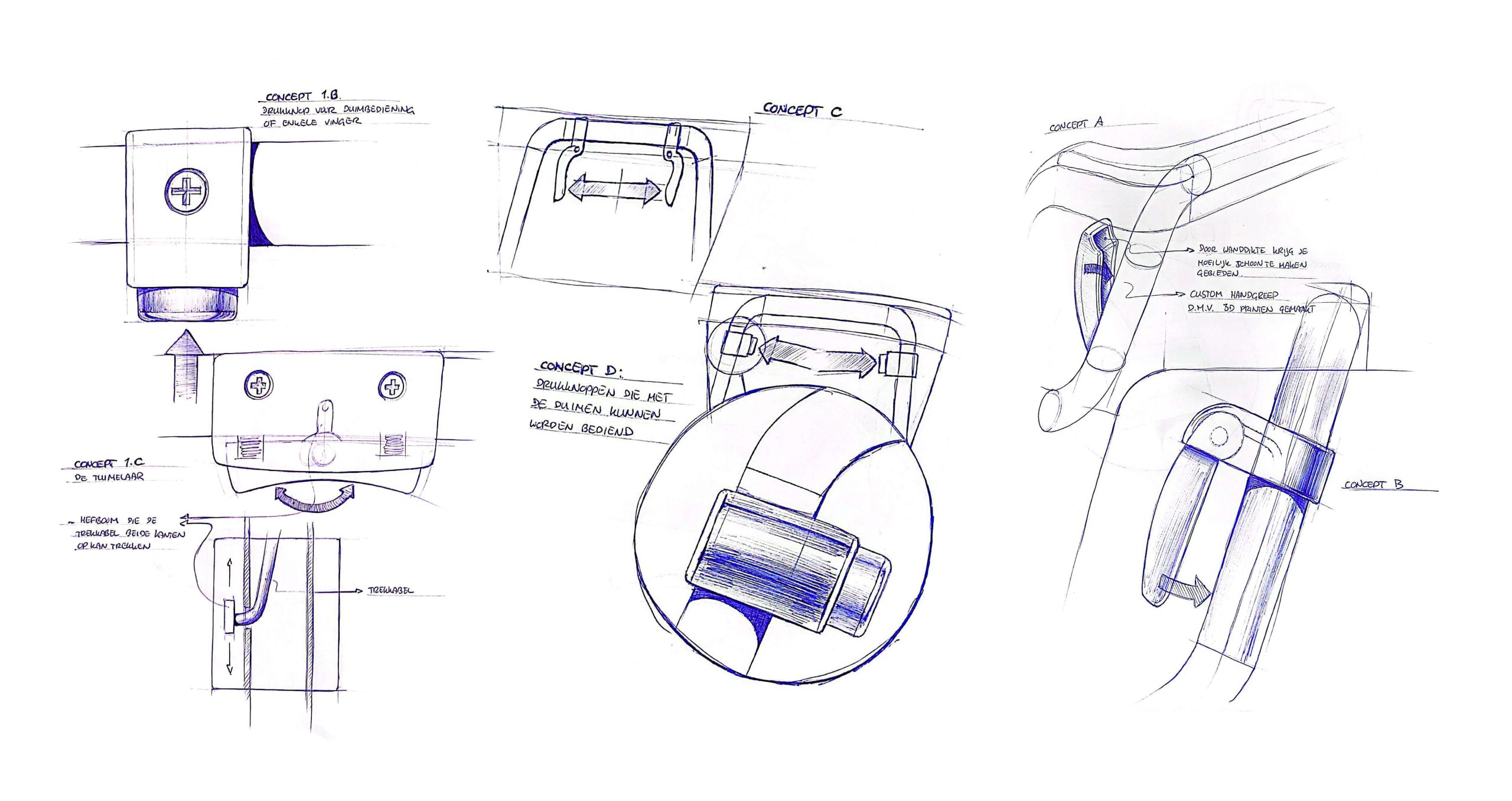
Ideation of the details
Concept directions for the main shape
Stability and safety
Because both side panels can be fully opened, stability was a crucial design challenge. WeLLDesign optimized the construction and base structure to ensure maximum safety. In combination with braked wheels and a robust frame construction, the crib now meets all requirements for a Class I MDR-certified product (MDR 2017/745).
Design
In addition to engineering and functionality, great attention was paid to aesthetics. The existing prototype did not yet visually align sufficiently with the Mobycrib product line. Through the redesign, the crib gained a transparent, calm, and friendly appearance that fits within the series and conveys trust in a clinical environment.
Hygiene and medical requirements
The Mobycrib Joy was developed in accordance with medical Class I requirements. Materials, detailing, and finishing are tailored to hygiene, cleanability, and long-term use. Open seams and unnecessary details were avoided, making the product suitable for intensive use in hospitals.
Ergonomics
In designing the Mobycrib Joy, significant attention was paid to ergonomics and intuitive operation. Handles are logically positioned, and key control points are highlighted with contrasting colors. Height adjustment and smooth maneuverability make the crib easy to position without physical strain for parents or healthcare staff.
A product with impact
The Mobycrib Joy contributes to a better start for mother and child. By facilitating physical closeness, the crib supports bonding, comfort, and rest during the postnatal period. At the same time, the design seamlessly meets the practical requirements of healthcare professionals: stable, safe, and easy to operate. This makes the Mobycrib Joy ready for the next step—deployment in clinical practice by VAB.
What is your design challenge?
Do you have a design challenge or issue? We are ready to get started for you. Contact us to explore the possibilities.