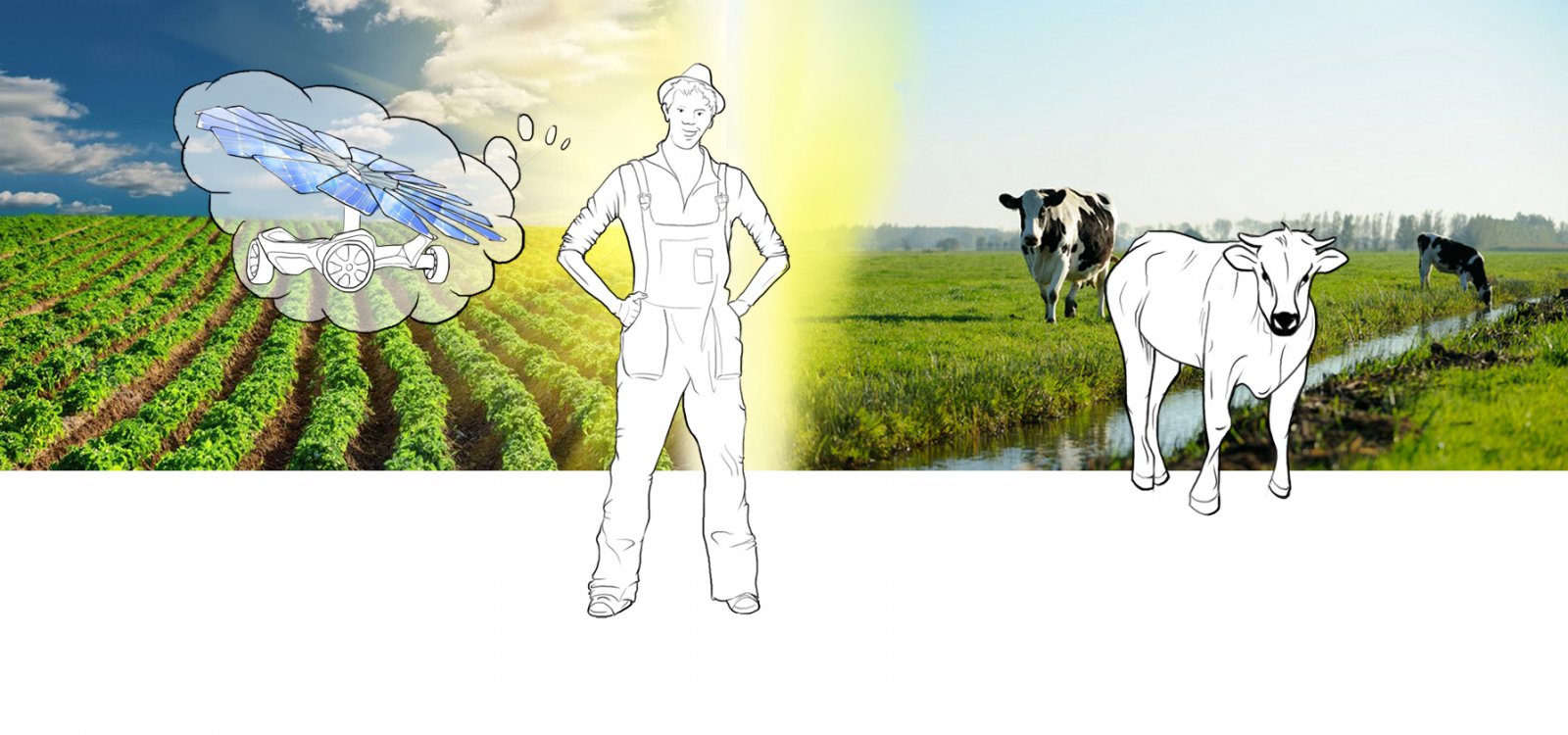
The demand for solar systems
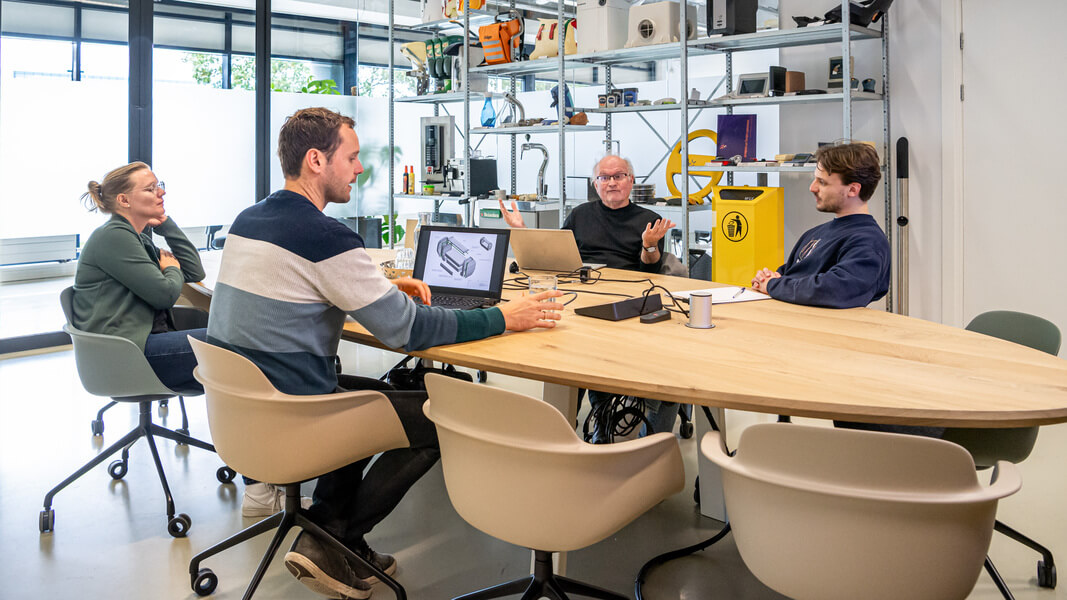
Met AgroZon The Netherlands Enterprise Agency, RVO, aims to promote sustainable energy generation through innovative solar systems in the near future without impacting the agricultural sector. On Friday 13 October 2017, the following question was central during a creative inspiration and design meeting in Bunschoten: How do we arrive at solutions for utilising agricultural land for solar energy generation while optimally preserving the agricultural function?
All parties in the chain have contributed to developing innovative solutions with AgroZon – from designers and panel producers to farmers and scientists. The most resourceful ideas were presented during the annual event for the solar energy sector, Sunday, on 8 November. The public prize was won by the Synergie concept.
Further elaboration
The concepts were assessed by a jury at the end of November. The three prize winners of AgroZon are: Synergy, H2Avestor and SunOpy. The winners will receive guidance from design and innovation agency WeLLDesign for further development between December 2017 and March 2018.
The AgroZon jury consisted of:
- Kees van Zelderen – Portfolio Holder Climate and Sustainable Energy at LTO Netherlands
- Olaf van der Graag – Director of the Dutch Association for Sustainable Energy (NVDE)
- Wijnand van Hooff – Programme Director Solar Energy, TKI Urban Energy
- Marc Tassoul – Lecturer Faculty of Industrial Design Engineering, TU Delft
- Rudy Brons – Brons + Partners landscape architects BV
The 12 entries
1 Solar Tulip
- Through solar tracking, mirror reflection and cooling, 5x more power per panel.
- Panels or construction are protected because the mirrors fold up in ‘heavy’ weather.
- Axiturn has proven technology for mirror hinges.
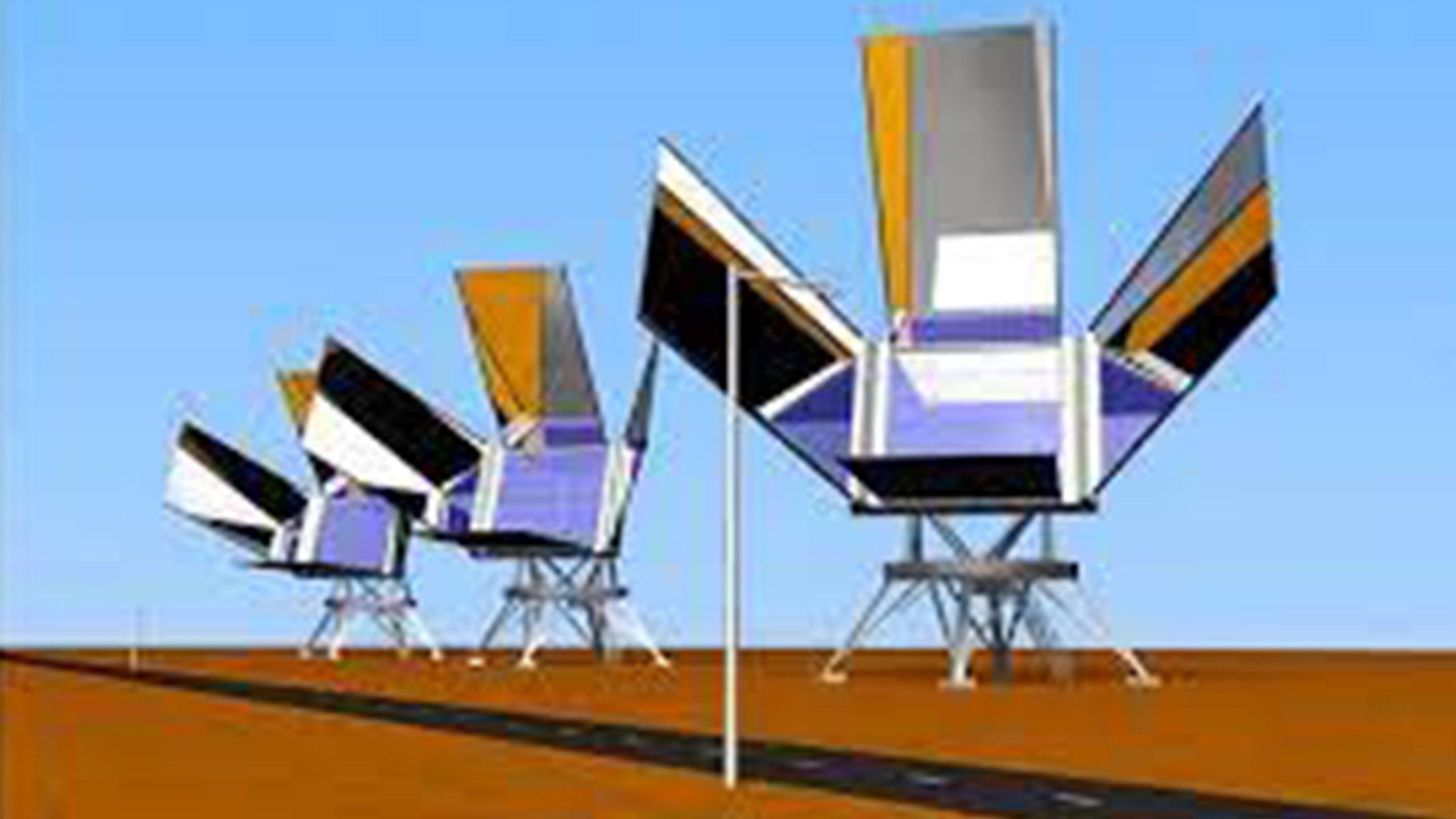
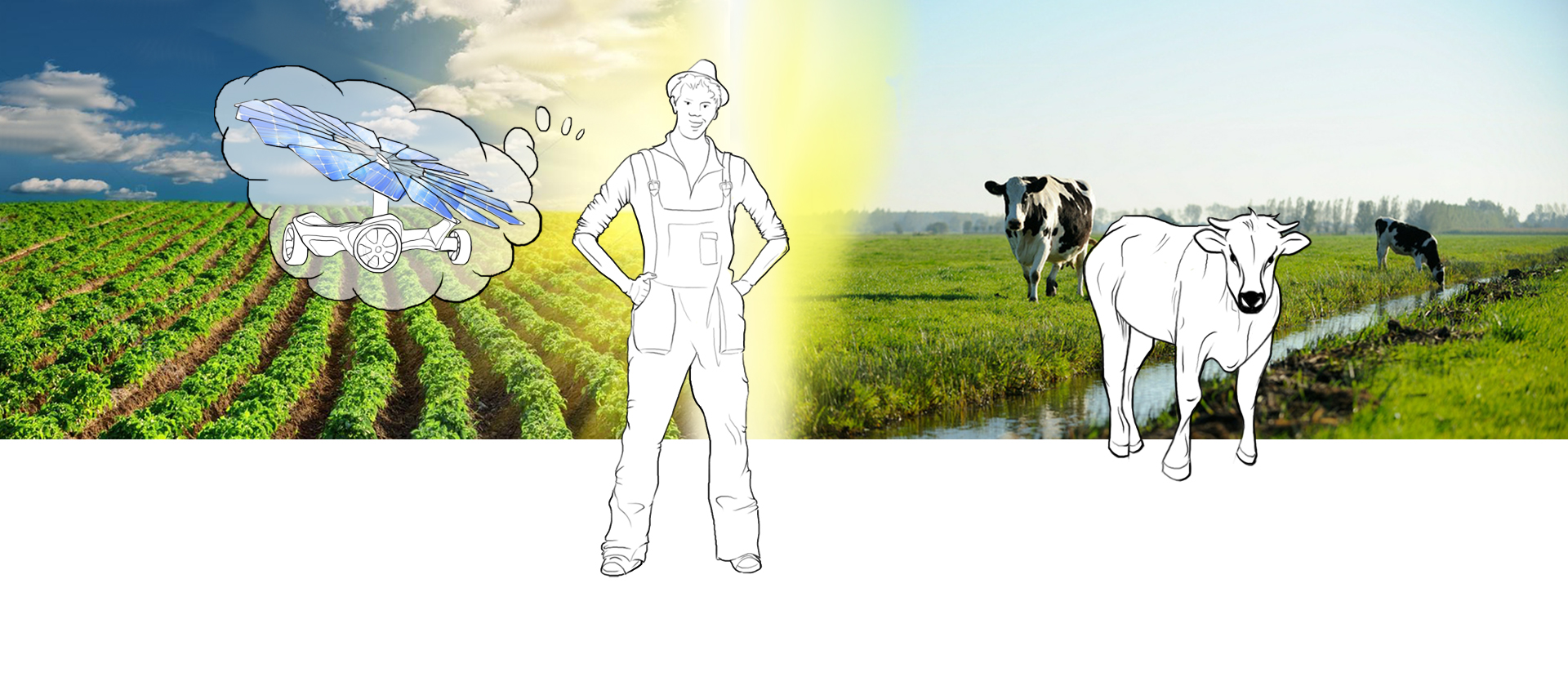
Solar Tulip is a large solar module that generates 3-5 times more electricity by reflecting sunlight onto the panel with large mirrors and rotating with the sun (solar tracking). To avoid shadowing each other, a maximum of 16 Solar Tulips can be placed on 1 hectare with a solar panel surface area of 5x5 metres, 5 metres above the ground. Tractors can drive underneath without difficulty for land cultivation. In addition, the mirrors fold in during bad weather for self-protection. The farmer performs maintenance themselves for optimal panel performance, just like with their cows: ‘solar milking’.
2 De Glind
- Energy production and shelter for chickens
- Grassland covering 40% of the area
- The solar panels are also protective coverings.
At present, in the pasture areas of organically raised poultry. This provides the necessary shelter for the chickens from birds of prey in combination with the generation of sustainable energy.
3 Raspberry Leaf
- Solar panels above water or waterlogged fenland areas
- Functional product, climate buffer, stop peat oxidation (CO2 emissions) and water purification
Vitis Idaea wants to utilise land that is submerged in the Netherlands for solar energy generation. The primary function of the area would then be the production of solar electricity. Secondary functions include counteracting peat oxidation and water purification. This water then forms a climate buffer.
4 Synergies
- Vertically mounted bifacial PV modules
- Supplies energy during peak demand: in the morning and afternoon
- Space between modules for tractor
- Semi-transparent/reflective fabric between the panels and above the crops
- Protective greenhouse effect, higher and more stable yield.
Synergy between generating solar power and enhancing crop yield, that is the aim of Synergy. The vertically placed bifacial PV modules supply electricity at times of highest demand, smoothing out the peak typically seen in solar energy generation mid-day. Semi-transparent/reflective cloth positioned between tall panels and low-lying crops allows sunlight to reflect onto the panels and provides a protective ‘greenhouse effect’, leading to a higher and more stable yield.
5 H2avalanche
- Mobile solar panels on a crawling construction‘
- Per season/year, the H2moves to a next segment of the land.
- Autonomous movable solar panels and seasonally movable, rotating with crop rotation
- Solar energy is processed into H2 locally stored
- H2-stock is used when needed
De H2The harvester has no electricity, but hydrogen as a final product. Solar power generation happens at mobile solar farms. The panels are angled on wheels and can either autonomously relocate per season using their own generated power, or they are moved annually across the field. The remaining generated electricity is then directly converted into hydrogen and stored locally. This way, the mobile solar farm does not require any cabling across the agricultural area. The H2stock is used when necessary.
6 Eelerwoude
- Because the panels can fold and are a few metres apart, there is space for the tractor
- Grow with the crop
- Limited landscape impact
The Eelerwoude concept consists of panels that rotate with the sun, placed on the farmer's less fertile land. They are positioned far enough apart so that a tractor can drive between them after they are folded. The structures grow in height along with the crops for optimal integration into the landscape. To complete the cycle, the energy is stored in an energy hub in the form of hydrogen.
7 The Sun Hen
- Permanent occupation of land leads to high infection pressure and grass disappears without recovery; mobility resolves that
- Chickens must be protected from birds of prey and foxes.
- Small poultry houses run on rails that are attached to the panel frames.
This way, the chickens benefit from protection against birds of prey and foxes, and the land is not permanently occupied. Permanent occupation of land leads to high disease pressure and the grass dies off without recovery. The Zonnekip is a mobile chicken coop that is placed between the solar panels, ensuring a spread of the occupation of the chicken run.
8 Green2
- AgroZon area next to Kerkrade, 14 ha
- 10 MW, 24,000 households
- Fast charging station cars
- Flora and fauna stimulated
- Tourism and recreation
Green2 is a zoning plan for the 14-hectare area next to Kerkrade, where solar power can be generated for 24,000 households. There is ample space for tourism and recreation in the area, and flora and fauna are encouraged. On the edge next to the motorway, fast-charging stations will be installed for cars powered by solar energy.
9 SunOpy
- Modular, movable, adjustable and foldable sun canopy
- Thin, ultra-lightweight, high-efficiency flexible panels
- For every size and type of land
SunOpy's solar awnings can be moved across the land and folded away in severe weather if necessary. The panels are modular, movable, adjustable, and foldable, made from thin, ultra-lightweight, high-efficiency flexible solar films, which are adhered to lightweight plating. They are moved over steel cables on posts spaced 15 metres apart. The applications for the land underneath this AgroSun system are extensive.
10 Organic Chicken
- Kip only comes outside when there is protection.
- Organic eggs are becoming increasingly expensive.
- Covered run for an outdoor feel in bad weather
In the biological free-range hen system, hens only go outside when they are protected from birds of prey and foxes. The panels provide this protection, and in bad weather, the hen gets an outdoor feel. The potential increases because the organic egg is experiencing a significant price rise.
11 Hollands Kroon
- Permanent agricultural area
- Water management
- Fauna enhancement
Duo Agri Energy Park is a concept for installing light-permeable solar panels as roofing on open greenhouse structures. It is a permanent agricultural area, aids in water management, improves fauna, captures CO2, and aligns with the circular economy.
12 Unicorn
- Flexible solar strips on flexible plastic foam
- Composition in a social workshop
- Flexible solar panel strips are placed on large rolls of foam, which can then be rolled out across the land using a tractor. When the land is in use, the panels can easily be rolled back up and stored.
 Nederlands
  English (UK)