
Fresh air ‘invigorates’ and energises us. Everyone has experienced how stuffy indoor air can be. For example, when you enter a classroom where a busy class has just had an intensive lesson, or an open-plan office where people are working hard to meet a deadline, or a meeting room where tough issues have been thrashed out. Quickly open a window!
In order to create true added value, WeLLDesign and Interduct Group will be at the exhibition on 29 and 30 March Workplace Experience In Gorinchem, the Healthy Air Xperience was presented. At this exhibition in the Healthy Air Xperience, the public was able to experience the effect of good ventilation under the motto: come and get some fresh air with us!
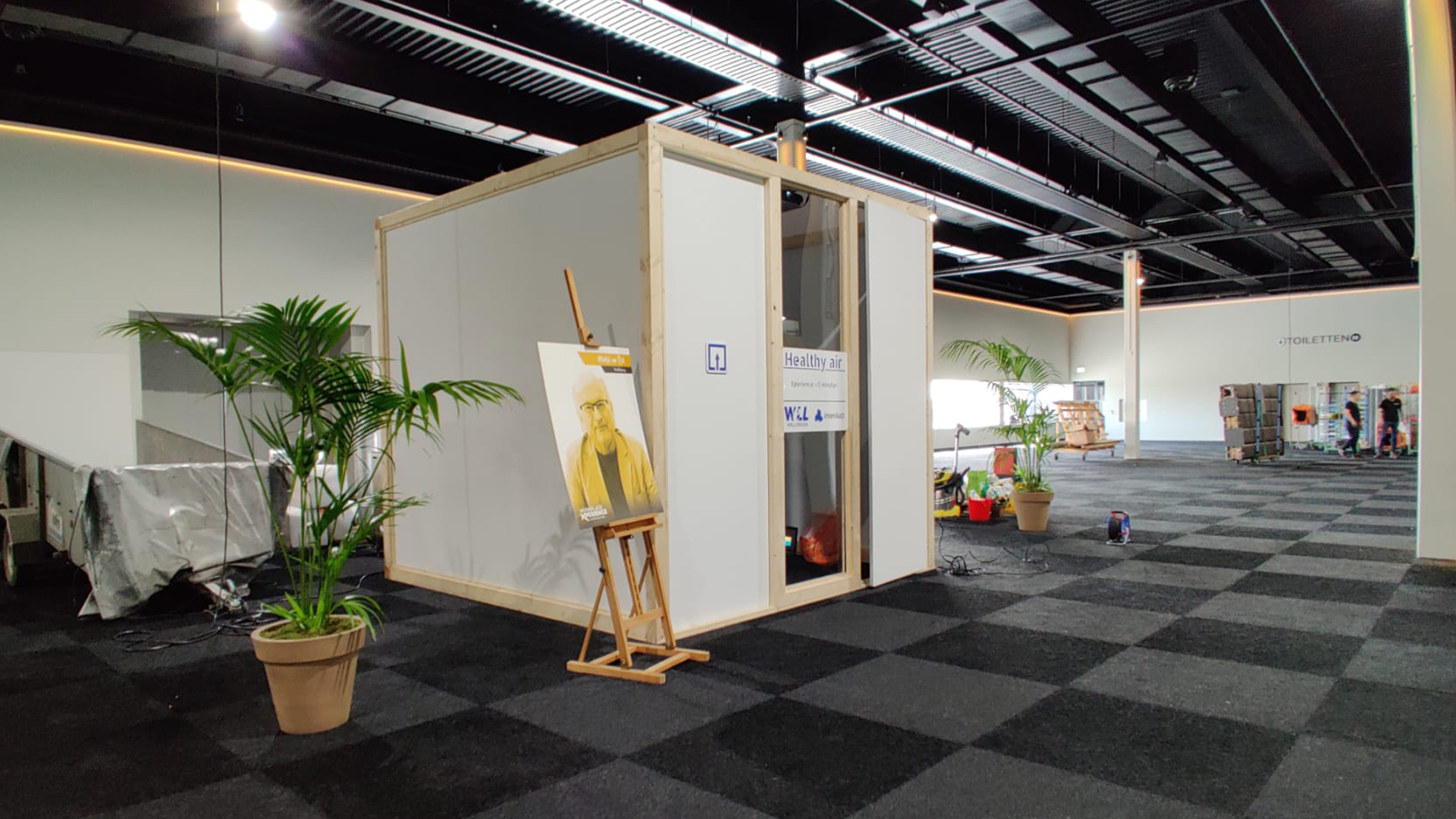
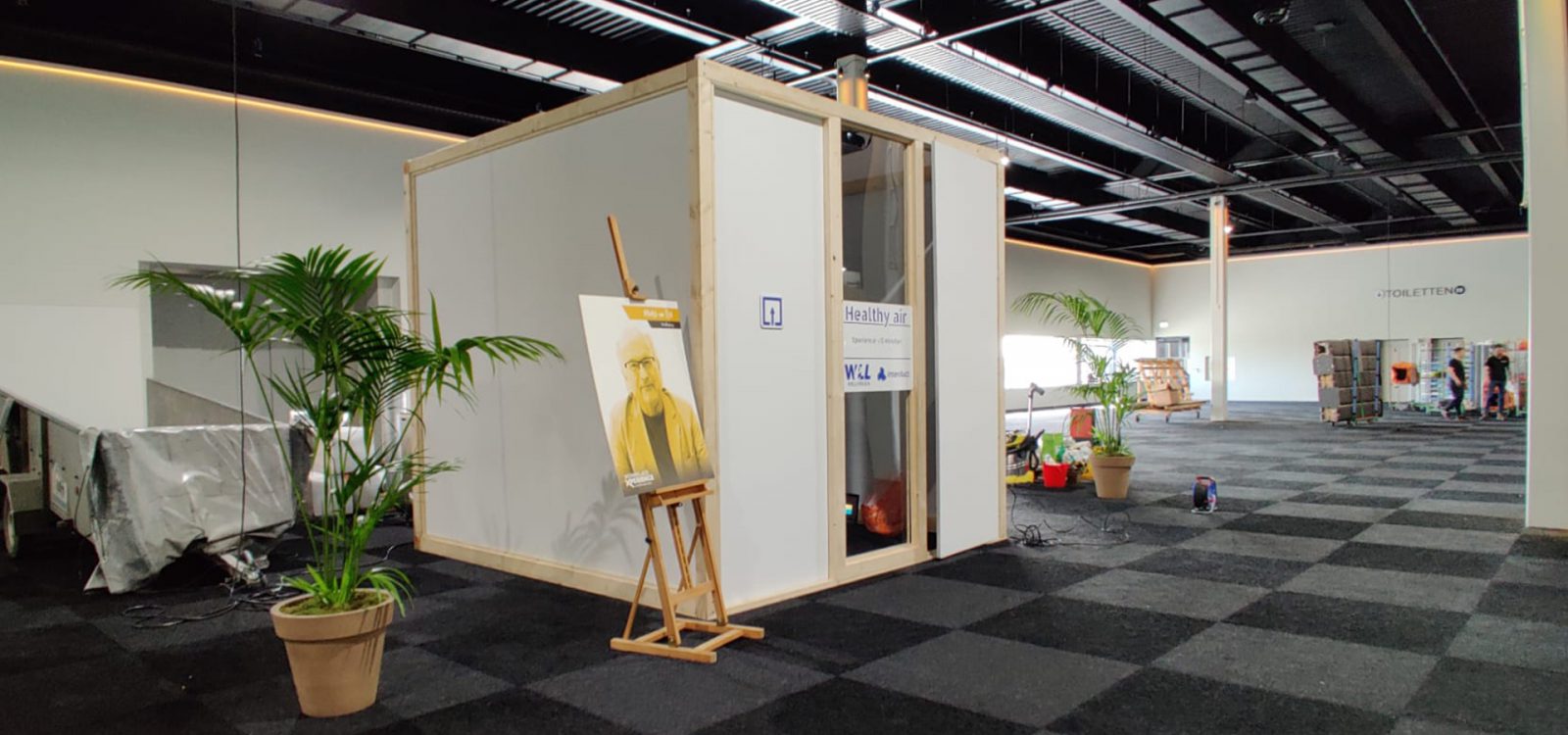
WeLLDesign and Interduct at the Healthy Air Xperience. A stand where people could clearly experience the importance of ventilation.
Why a Healthy Air Xperience?
Clean, healthy air is a primary necessity of life. And of great importance for working with concentration for extended periods. Yet we see that the indoor climate of living and working spaces still receives insufficient attention and the quality of indoor air does not meet requirements at all.
Het longfonds geeft het al aan: we brengen gemiddeld meer dan 20 uur van onze tijd binnen door. Binnenshuis, op het werk of op school. Helaas is de lucht binnen vaak ongezond. Je kunt er letterlijk doodziek van worden. In alle ruimtes is frisse lucht van belang.
A healthy indoor climate
In a healthy indoor environment, you breathe clean and safe air, free from particulate matter, bacteria, viruses, allergens, and other pollutants. Whether at school or in the office, working in healthy air keeps students engaged and employees vital and productive. With ventilation, air purification, ionisation, and monitoring, you ensure the best air quality. The indoor environment can be improved in four phases.
Stage 1. Ventilate where possible
Ensure a supply of fresh air in your indoor climate. Ventilation is crucial for good humidity levels and to prevent CO2 concentrations from becoming too high. However, be mindful of outdoor particulate matter concentrations when ventilating. Avoid bringing polluted air inside.
Stage 2. Refresh and clean the air
Ventilation alone is not enough. You need air purification to get the air truly clean. Some air purifiers also remove fine dust, viruses, allergens and other impurities from the air. Employees are then more productive and have more energy.
This is called passive air purification: dirty air is directed to a filter and purified there.
Phase 3. Ionise the air and prevent virus transmission
With filter-based air purifiers, we clean the air using filters. However, to prevent the transmission of viruses and achieve an optimal and safe indoor environment, it is necessary to tackle viruses whilst they are still in the air itself. This is achieved through ionisation: ions are introduced into the airstream in a controlled manner and attach themselves to all particles in the air, both large and very small. This deactivates the viruses. The risk of virus transmission can be reduced by up to 97%.
Ionising air purifiers remove ultrafine particles down to PM0.007. For employees with asthma or other lung problems, this is a true breath of fresh air.
This is active air purification: the air is cleaned before it enters the room.
Phase 4. Air quality monitoring using data
With air quality measurements and setting control parameters, you monitor the improvement of the indoor climate. You gain insight into air quality and use data to optimally coordinate the ventilation system and air purification. It's good to know that the air everyone breathes in the room is clean, healthy, and safe.


 Nederlands
  English (UK)